The Unplaced Era: Zelda After the Chart
A synthesis paper. Every load-bearing claim below was verified in this project's two adversarial research passes — see The Zelda Timeline and Switch-Era UI & Menu Design for the underlying sourcing. What's new here is the argument: reading the four unplaced titles together, as a single publishing strategy rather than four separate mysteries.
The chart that stopped
 2017 2017 | 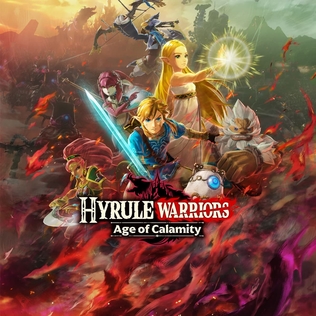 2020 2020 | 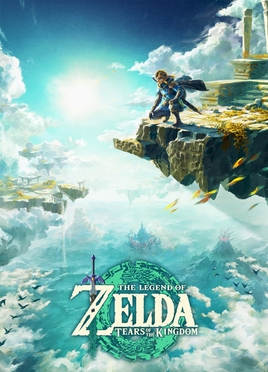 2023 2023 | 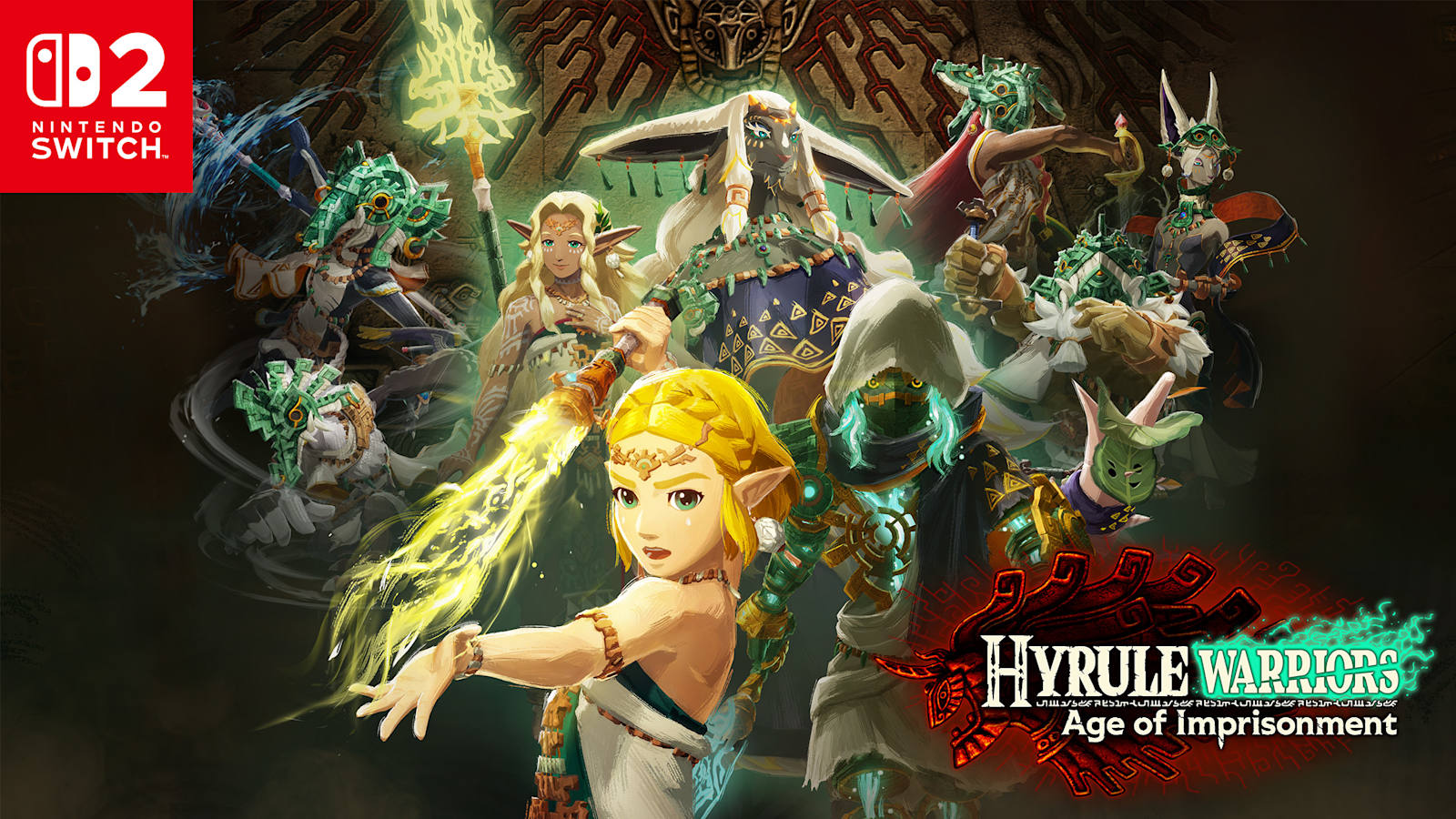 2025 2025 |
The four titles that shipped entirely outside any Nintendo-published timeline chart.
Nintendo has published exactly two series-spanning timeline charts: Hyrule Historia (2011) and a revised chart in the Zelda Encyclopedia (2017). Since then — nothing. Four major releases now exist entirely outside any official map of the series' history:
| Title | Released | Official placement |
|---|---|---|
| Breath of the Wild | 2017 | "After all three branches" — branch deliberately unspecified |
| Hyrule Warriors: Age of Calamity | 2020 | None. Absent from every chart |
| Tears of the Kingdom | 2023 | Same deliberate ambiguity as BOTW, on record |
| Hyrule Warriors: Age of Imprisonment | 2025 | None. "A canonical tale," never chart-placed |
That's nine years of releases — including the two best-selling games in series history — with no update to the official document that defines what the "Zelda timeline" even is.
Ambiguity as policy
The temptation is to read this as neglect. The record says otherwise. Asked directly which branch Breath of the Wild follows, producer Eiji Aonuma answered, in a Famitsu interview: "That's… up to the player's imagination, isn't it?" Director Hidemaro Fujibayashi concurred, and the stance was later extended — explicitly — to Tears of the Kingdom, which Aonuma called "a puzzle the users will have to see if they can solve."
This isn't a studio that forgot to update its wiki. It's a studio that spent 2011–2017 canonizing a famously convoluted chronology, watched the timeline become one of the most argued-about artifacts in gaming, and then made ambiguity itself the product. The chart's silence after 2017 is the same design philosophy that made Breath of the Wild's map markerless: remove the authoritative answer, and the space fills with player reasoning.
The two Warriors games: blessed but homeless
The Hyrule Warriors pair occupies a stranger position than mere spin-off status. Age of Calamity presents itself as the Great Calamity prequel — then diverges from the history Breath of the Wild's flashbacks record, playing out as an alternate "what-if." A full-text search of the official-chart-tracking record turns up zero references to it; it is not unplaced so much as unacknowledged.
Age of Imprisonment (November 6, 2025, Switch 2 — over a million copies shipped in its first two months) is closer to the flame: Nintendo's own framing calls its story "a canonical tale" of the ancient Imprisoning War, and its menus and UI are, per reviewers, near-identical carries of the BOTW/TOTK visual language. Yet neither its marketing nor its press coverage states a chart position. Its prequel status is inferred from subject matter — an inference everyone shares and no one official will print.
The asymmetry is telling: Nintendo will bless these stories' content ("canonical tale") while refusing them a place. Canon, in the post-2017 era, has become a property of stories rather than of positions on a diagram.
Why this matters for how fans (and this site) chart it
Every timeline chart of the modern era — including the one on this site's homepage — is therefore doing interpretive work the moment it draws these four titles. This project handles that by rating every placement's confidence explicitly: official for chart-printed positions, speculative for the four unplaced titles, with sourcing notes stating exactly what is inference. The alternative — drawing confident lines and letting readers assume Nintendo drew them — is how misinformation about this series propagates.
One correction from this project's own history illustrates the point: our planning documents initially described Age of Imprisonment as an upcoming 2026 title and assumed the community treated Age of Calamity's divergence as a formally recognized branch point "like the Ocarina of Time split." The research pass falsified both — the game had already shipped, and the branch-point framing did not survive verification as an established community consensus. Both corrections are preserved in the papers rather than papered over, because a chronicle that hides its revisions can't be trusted about anyone else's.
The era ahead
Aonuma has suggested in interviews that Age of Imprisonment's take on the Imprisoning War "could inspire" the next mainline Zelda. Read alongside the ambiguity policy, that's the most informative sentence Nintendo has uttered about the timeline in a decade: the founding era is live creative territory, and the chart will not be updated until — unless — a game makes updating it worthwhile. Until then, the most accurate map of modern Zelda chronology is one that draws its uncertainty on purpose.
— Chronicle Slate, July 2026