Shared Trunk (Before the Split)
The single shared history every branch descends from — from the goddess Hylia's war against Demise to the fateful ending of Ocarina of Time.
Fork point: Skyward Sword
Forks into: Child Timeline · Adult Timeline · Downfall Timeline
The Story Arc
Everything begins in the sky. Skyward Sword establishes the mythology the entire series leans on: the goddess Hylia seals the demon king Demise, and his dying curse binds an undying hatred to the bloodline of the goddess and the spirit of the hero — the in-fiction reason a Link, a Zelda, and a Ganon keep returning across millennia.
Generations later, The Minish Cap and Four Swords chronicle the rise and sealing of the wind mage Vaati, and the forging of the Four Sword. Then comes Ocarina of Time — not the end of this era but its detonation point. Its ending can resolve three different ways, and Nintendo's official chart treats all three as real, each spawning its own future: the Child, Adult, and Downfall timelines.
Games, in chronological order
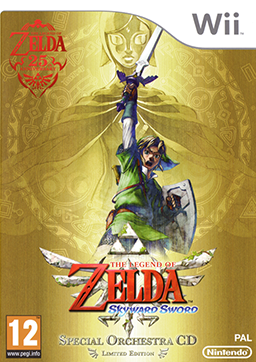
Skyward Sword
The chronological origin point of the entire series: the goddess Hylia seals Demise's malice beneath the floating island of Skyloft, and the first Link and Zelda forge the bond — and the Master Sword's earliest form — that echoes through every era that follows.

The Minish Cap
Link teams up with a sentient talking hat, Ezlo, and gains the ability to shrink to the size of the tiny Minish people to stop Vaati, the wind mage whose rise here sets in motion conflicts referenced throughout the pre-split era.
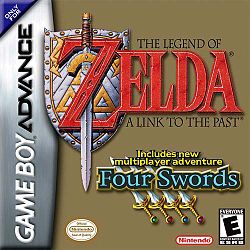
Four Swords
A cooperative-multiplayer dungeon crawler in which Link draws the Four Sword and splits into four colored copies of himself to stop Vaati, who has escaped his imprisonment and kidnapped Princess Zelda.

Ocarina of Time
Link travels between childhood and adulthood to stop Ganondorf from seizing the Triforce. Its ending is the single fork point of the entire official timeline: depending on how it's interpreted, three different futures branch out from here.